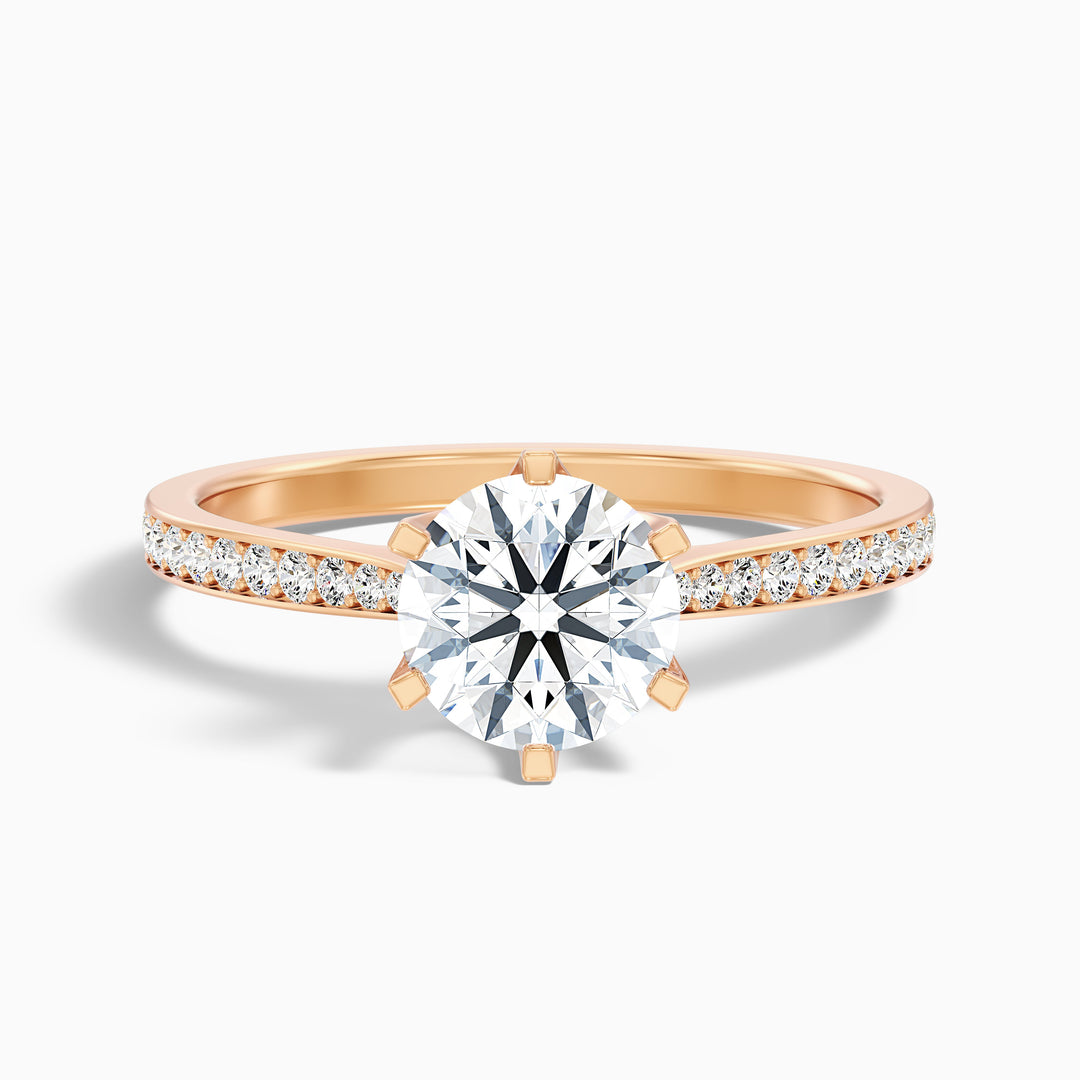
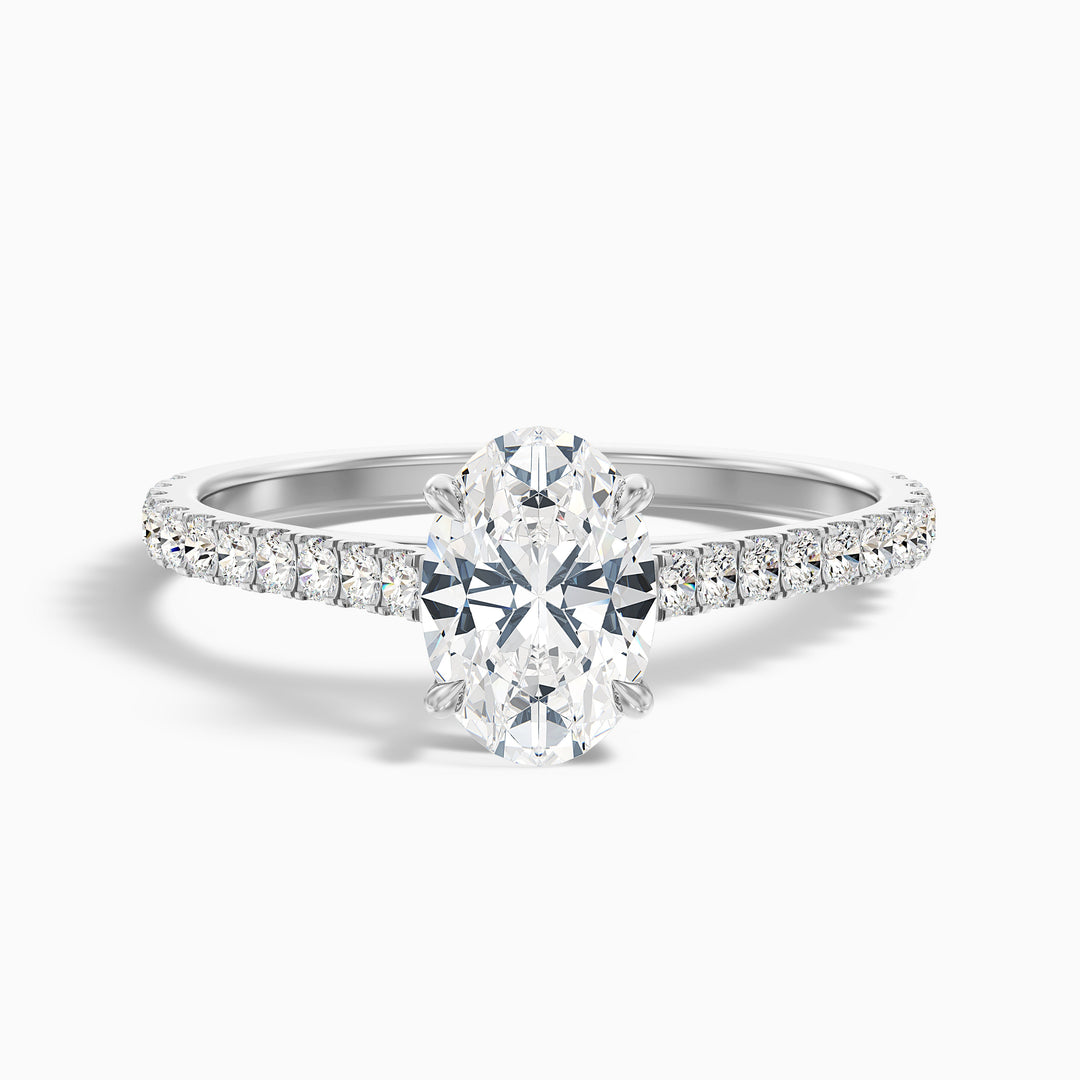
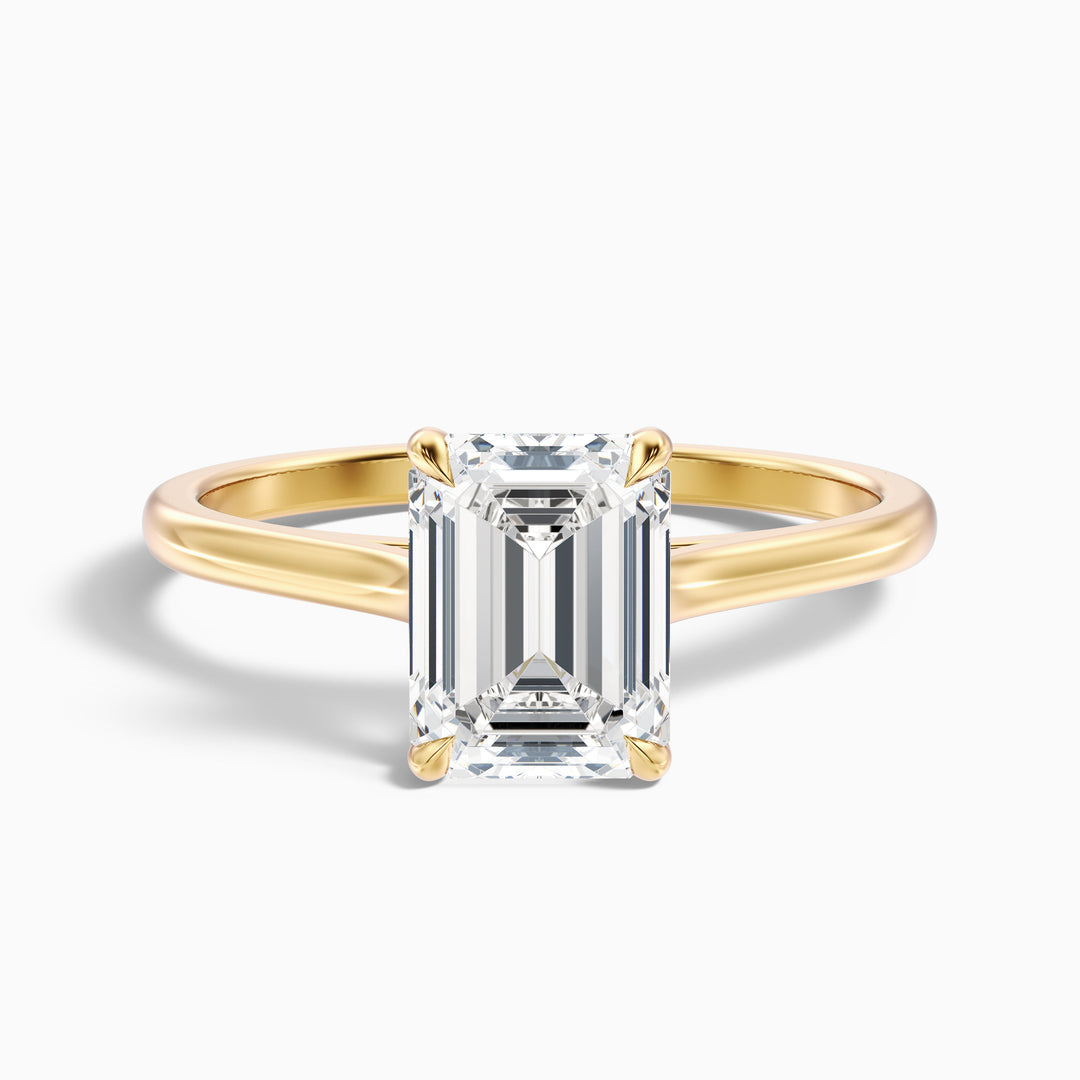
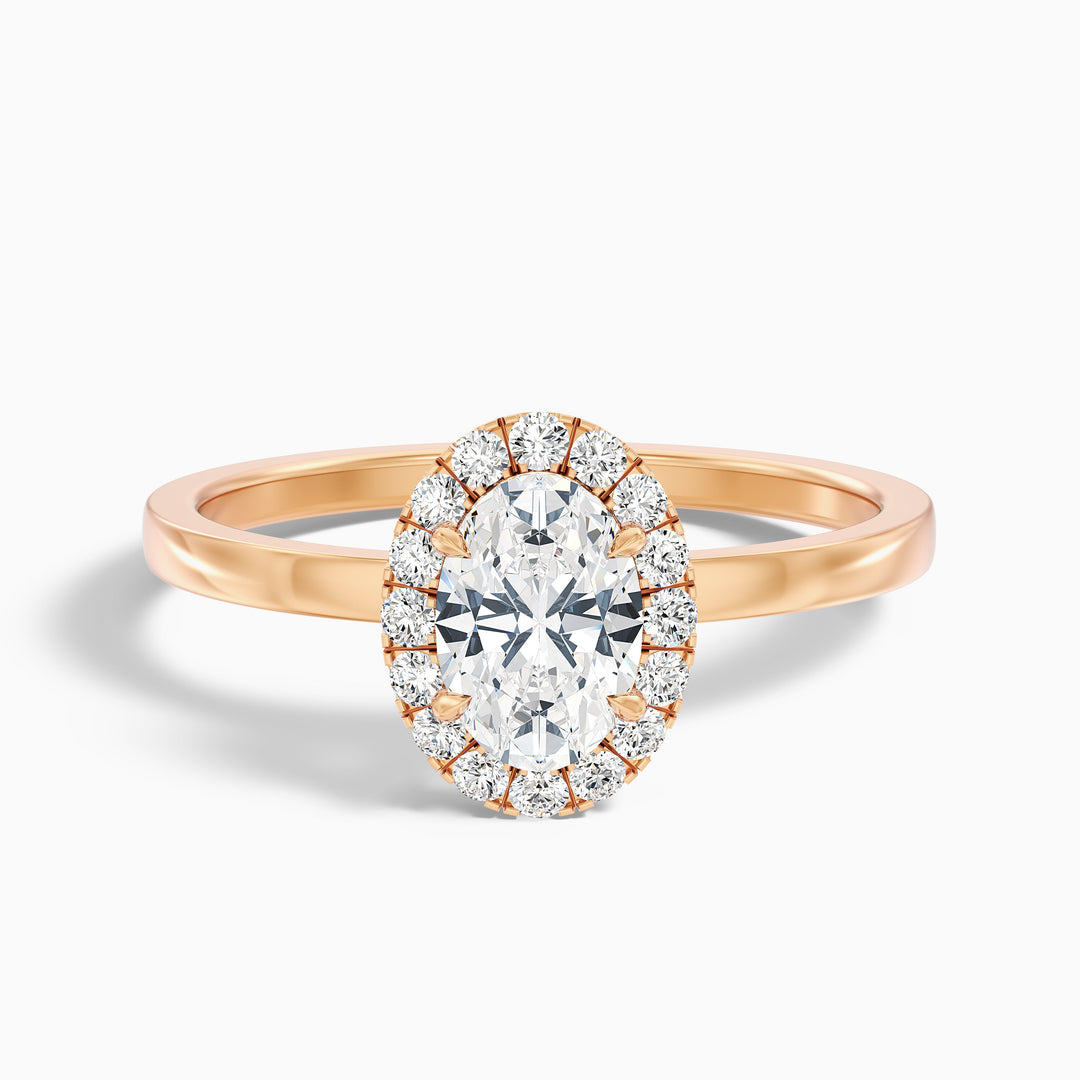
The Asscher cut is one of the few existing diamond shapes that easily grabs your attention at the very first glance. Designed in 1902 by Joseph Asscher of the Royal Asscher Diamond Company, it was built for the Art Deco era's obsession with geometry and light. The result is a square shape with deeply cropped corners, a high crown and step-cut facets that create a repeating octagonal pattern when seen straight into the stone.
It is also known for its "hall of mirrors" effect where a mesmerizing optical illusion is created by its facets, appearing like a seemingly infinite corridor of lights or a mini-kalideoscope. At CaratBee, every asscher cut lab grown diamond ring you see is certified and crafted to showcase the same optical depth at its best.
Explore Our Collection of Asscher Cut Lab Grown Diamond Rings
Our lab grown asscher cut diamond rings range from classic solitaire settings to bezel and side-stone designs, available in silver, white gold, yellow gold, rose gold and platinum. Whether you want the stone to be the center of the attraction or want the setting that frames it to stand out, our collection covers both directions.
What Makes the Asscher Cut So Special?
An asscher cut ring has flat, rectangular sides with step-cut facets that go parallel, instead of angles that point down to the bottom. This design gives the ring a smooth, polished appearance, creating a rich, glassy glow that draws the eye deeper into the stone rather than relying on the bright, sharp sparkle associated with more modern diamond cuts.
If you look at a well-cut Asscher lab grown diamond ring like the ones available at CaratBee, you can see a solid cross mark being formed, sort of like four symmetrical windmill arms towards the corners. If the facets are uneven or the symmetry is even slightly off, that pattern loses its crispness and the stone loses what makes it special. For example, if the diamond is cut too deep, the windmill gets closed off and the stone looks dark when viewed from above. The sides also become less clear and the stone appears heavier or bigger than it actually is.
To retain the speciality of this stone, you want the center of the diamond to be open and sparkly because no matter how perfect the clarity grade is, it can’t fix a poorly cut Asscher diamond. Since this cut has a lot of detail, always ensure to see videos of the diamond before buying (like ours) so you can be sure it looks good from all angles.
Benefits of Choosing Lab Grown Asscher Cut Diamonds
- Same Material, Verified Origins: Lab grown Asscher cut diamonds are identical to mined diamonds in terms of chemical composition and optical properties. The only difference is its origin. CaratBee’s diamonds are grown in controlled environments and certified by independent gemological labs like the IGI.
- Better Value Per Carat: Asscher cut diamonds that are lab grown, costs considerably less than a mined stone with the same cut, carat, color, and clarity. For the Asscher cut specifically, this matters because it benefits with higher clarity and larger carat weights. The affordable pricing will also ensure you can get the best of this design with its windmills and hall of mirrors effect.
- Less Prone to Chipping: The cropped corners of this design also reduce the stress points unlike in princess cuts that are prone to chipping. For something worn every day, this is a practical benefit you must consider.
Styles of Lab Grown Asscher Cut Diamond Rings
- Solitaire Setting: This features a single asscher-cut stone on a plain or knife-edge band. We suggest you go with either white-gold or platinum metal to maximize the effect of this style.
- Three-stone Setting: An Asscher center with triangle on either side is a unique look you won’t see anywhere. Since both these stones are step-cuts, the whole setting reads coherent.
- Bezel Setting: Apart from the daily wear security this setting offers, a bezel frames the straight, crisp lines of this cut beautifully, elevating its architectural and vintage vibe. Plus, since the facets are open and flat, inclusions in the stone are more visible here than in a round brilliant. This is why we recommend bezel setting for a clean-looking Asscher cut diamond ring.
How to Choose the Perfect Lab Grown Asscher Cut Diamond Ring
- Plan For the Size Difference: An Asscher cut carries a lot of its weight below the girdle in a deep pavilion setting, which means it looks smaller than most cuts of its shape. If you place a 1.5 carat Asscher next to a 1.5 carat round on your hand, they will look different so don’t be surprised. That’s why you must always add roughly a quarter carat over what you'd buy in a round to get comparable finger coverage. CaratBee’s lab grown diamond rings allow you to do that without taking away a significant portion of your budget.
- Pick Good Clarity and Color: The flat facets of an Asscher cut don't hide inclusions the way a regular brilliant cut does. If you’re going above 1.5 carat, go VS1 clarity (if less than 1.5 carat, VS2 is fine). Plus, color matters a lot here. For white gold or platinum settings, an H color or higher helps the stone appear bright and white. In yellow or rose gold, you have more room because the warm metal balances the tone anyway.
- Choose Based on Setting and Lifestyle: Your Asscher cut diamond has cropped corners that give it more durability than a pointed square or a princess cut but a bezel or half-bezel setting is always recommended. However, if your work does not require frequent contact with hands, prong settings are what you should go for. They show more of the stone’s brilliance but they do leave the corners slightly more exposed.
- Verify and Purchase Certified Gemstones Only: In the realm of AI-generated images, all photos look good. Only go ahead with a seller if they provide a IGI or GIA certification along with their diamonds. Every CaratBee lab grown Asscher diamond ring comes with an IGI report to verify your purchase and stone origin.