


A Brief History of the Asscher Cut Diamond

Some objects don't ask for your attention. They simply wait.
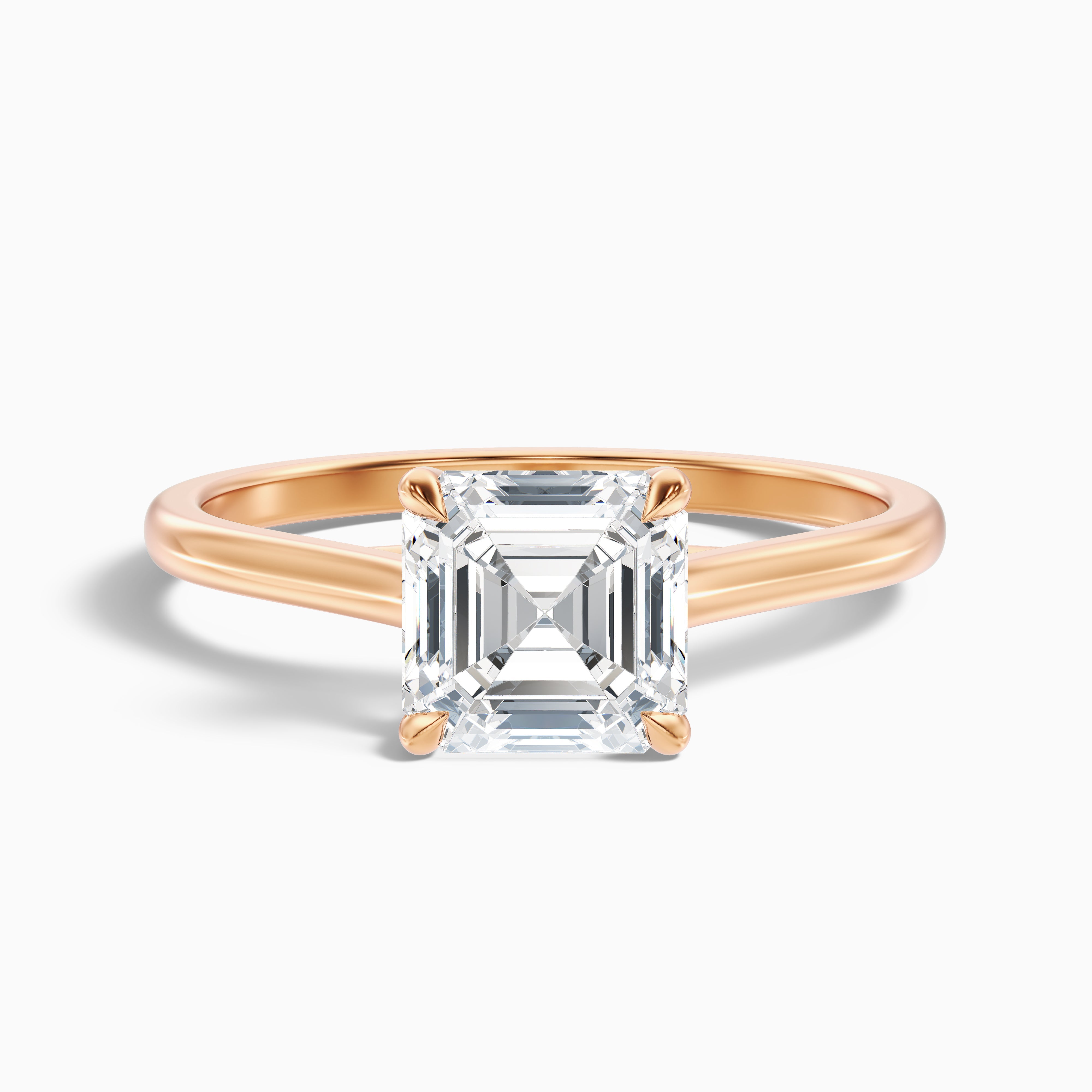
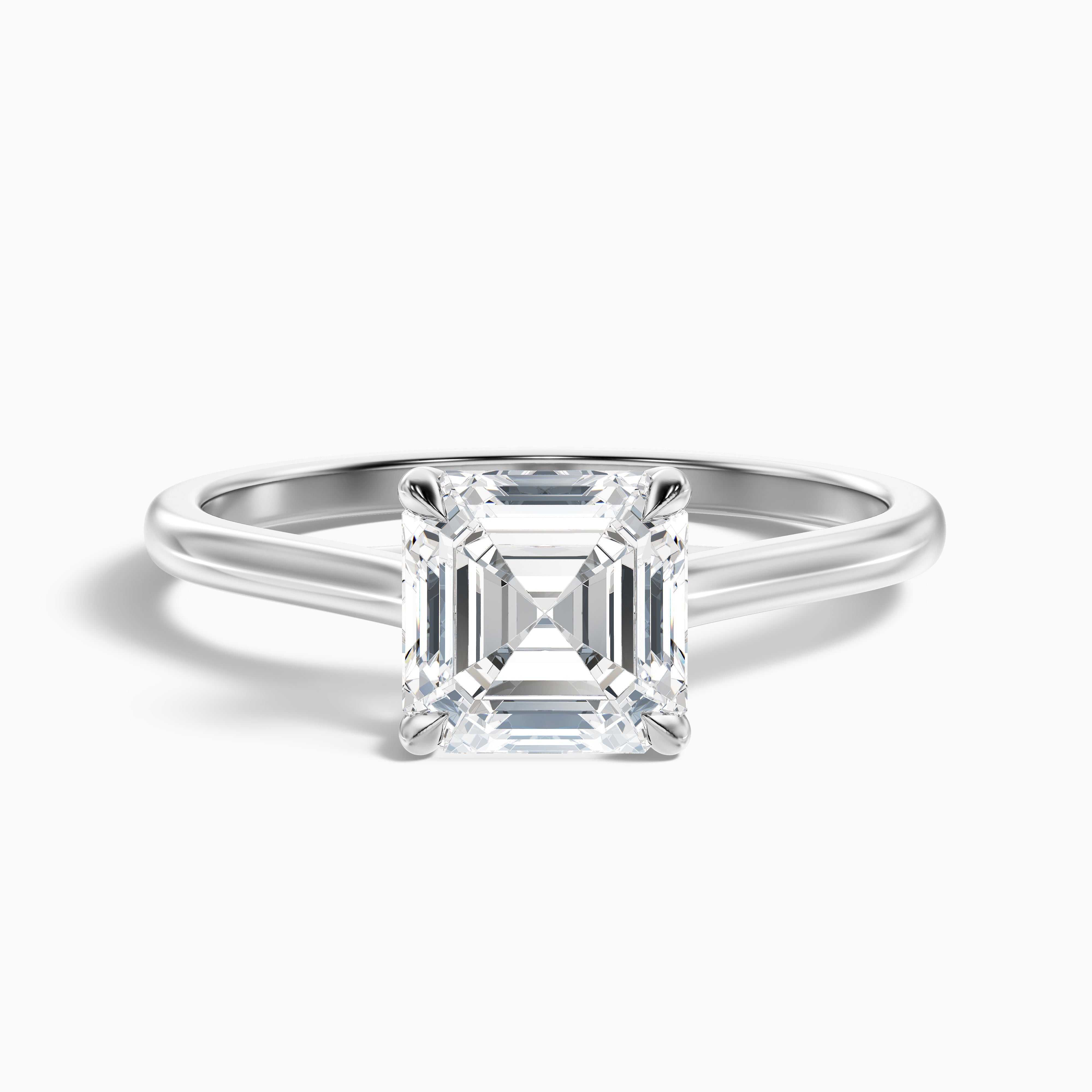
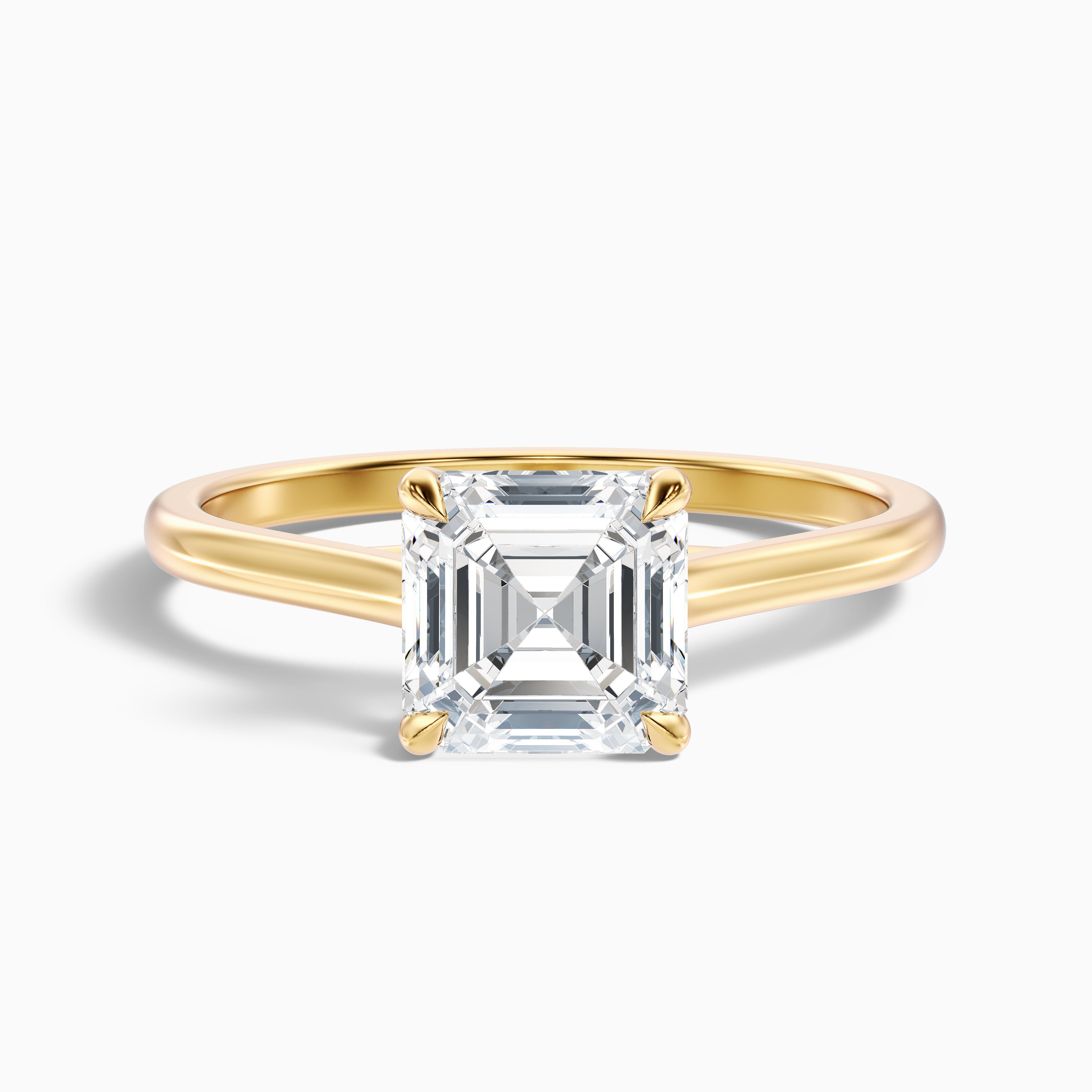
You're turning a ring over in your hands, a gift, perhaps, or something you've been considering for months. The stone is square, geometric, and unhurried. It doesn't throw brilliance outward the way most diamonds do. Instead, it pulls you inward, concentric squares receding into the depths of the stone like floors of a building viewed from above. It is not a stone you glance at. It is a stone you read.
That is the Asscher cut diamond. And its story begins not in a glittering showroom, but in an Amsterdam cutting house in 1902.
The Origin of the Asscher Cut Diamond
Ask any gemologist to explain what an Asscher cut diamond actually is, and they'll likely pause before answering. Not because the answer is complicated, but because it deserves to be said carefully.
In 1902, Joseph Isaac Asscher founded the Royal Asscher Diamond Company in Amsterdam. The city was already the diamond-cutting capital of the world, but Asscher wasn't interested in what already existed. He was interested in what a diamond could become if you stopped asking it to perform.
That year, he patented a cut unlike anything before it. Square in shape, with cropped corners and a deep pavilion; the lower half of the stone drew the eye downward rather than scattering light outward. It was architectural thinking applied to gemology. Deliberate. Geometric. Quietly radical.
Three years later, the world took notice. In 1908, Joseph Asscher personally cut the Cullinan diamond, the largest gem-quality rough stone ever discovered, at 3,106 carats . After the Cullinan, no one questioned what the Asscher name meant. It meant the most demanding work in the world went to one address in Amsterdam.
The Asscher cut diamond ring entered fine jewelry not as a trend, but as a statement of intent. To choose it was to choose depth over flash, structure over spectacle, geometry over glamour.
That original 1902 patent design had 58 facets. In 2001, the Royal Asscher family updated it to 74 facets, deepening the hypnotic effect the cut had always been reaching toward. But the philosophy behind it never changed.
Characteristics of the Asscher Cut
The Asscher cut doesn't announce itself. It reveals itself in increments, a little more each time your eye adjusts to its depth.
-
Step Cut Design
Unlike brilliant cuts, which stack triangular and kite-shaped facets to maximize light dispersion, the Asscher uses a step cut. Long, horizontal facets run parallel to the girdle, the stone's outer edge, descending in clean, receding planes toward the culet at the base.
The result is a stone that looks less like a prism and more like a room. It has walls, floors, and a geometry you can inhabit.
The cropped corners, what gemologists call an octagonal outline, prevent the sharp angles from chipping while giving the stone its distinctive squared silhouette. Every edge is intentional. Nothing is incidental.
-
Hall of Mirrors Effect
Hold an Asscher cut diamond under a single, focused light source, and you'll understand why collectors become obsessed. The step facets create a phenomenon known as the "hall of mirrors" effect, an infinite regression of reflected planes pulling your gaze deeper into the stone.
It is not the brightness, it is the depth. There is a difference. Most people spend a lifetime never seeing it. The Asscher cut makes it impossible to miss.
Where a round brilliant scatters light across a room, the Asscher holds it. The light lives inside the stone, not outside it.
-
Early Popularity
By the 1910s, Asscher cut gemstone rings had found a devoted following among European aristocracy and the wealthy, those who understood that restraint, in jewelry as in architecture, signals more confidence than ornamentation ever could.
The Asscher cut paired naturally with the platinum settings favored by Edwardian jewelers. Its geometric rigidity paired naturally with the clean lines and filigree detail that Edwardian jewelers favored.
It wasn't a diamond for every buyer. It was a diamond for a particular kind of buyer, one who preferred a stone that looked like a decision, not a display.
That distinction mattered in 1910. It still does even today.
The Asscher Cut in the Art Deco Era (1920s-1930s)
The Art Deco decade didn't inspire the Asscher cut. It finally caught up to it.
When the 1920s arrived, they arrived with geometry. Art Deco swept through architecture, fashion, and design with an obsession for symmetry, clean angles, and the kind of beauty that carried intellectual intention. The Chrysler Building. The geometric inlays of a Parisian salon floor. The hard, confident lines of a Manhattan lobby at midnight.
The Asscher cut diamond didn't adapt to this moment. It had been waiting for it.
Suddenly, the cut's defining qualities, its octagonal outline, its receding step facets, its preference for depth over dispersion, read as the visual language of an entire era. Jewelers paired it with platinum settings, black enamel, and geometric filigree. The Asscher cut diamond ring became a recurring presence on the hands of actresses, socialites, and the quietly powerful women who shaped the Jazz Age from its edges.
The 1920s and 30s also marked a shift in who bought diamonds and why. Women increasingly purchased jewelry as personal expression, not inherited obligation. The Asscher cut suited this new buyer precisely, a stone that rewarded discernment, that looked like a decision, not a display.
Then came the 1940s. The war economy contracted the luxury market. Platinum was rationed for military use. Art Deco fell out of fashion, replaced by softer, more sentimental design sensibilities. The Asscher cut retreated with the era that had celebrated it.
It wouldn't disappear. It would wait, the way it always had, patient, certain of its own worth.
Some things don't chase relevance. They outlast it.
More than a century later, the Asscher cut sits in the same position it always has, not waiting to be rediscovered, but waiting to be recognized.
The Diamond That Outlasted Its Era
Entire design movements built themselves around geometry and then dismantled themselves just as thoroughly. The Asscher cut watched all of it from the same cropped-corner silhouette it wore in 1902.
There is something worth considering in that. The jewelry we choose tends to reflect not who we are in the moment, but who we intend to remain.
Browse CaratBee's collection of Asscher cut lab grown diamond rings, handcrafted with ethically sourced, IGI-certified diamonds and available in a wide variety of stunning styles. Have a particular design in mind? Bring it to life with our expert ring customization service, where our master artisans shape every detail so you can make your moment truly special.


