


All You Need to Know About Marquise Cut Diamonds

There's just something about the marquise-cut diamond. It's bold without trying too hard, kind of dramatic but still soft around the edges. When you spot one on someone's hand, it doesn't just sit there quietly like other rings do. It stretches out, makes itself known, and holds your attention differently. And some people love that.
If you are new to diamonds, the marquise-cut diamond may seem unusual at first. It is not as common as round or oval shapes yet it feels personal when chosen with care. Today, this distinctive silhouette is available in both mined and lab grown diamond options, giving you greater flexibility across budgets than ever before.
At CaratBee, you’ll come across ring designs with marquise cut lab grown diamonds, that are created with balance and proportion in mind so the shape feels refined rather than overwhelming.
What is a Marquise-Cut Diamond?

A marquise-cut diamond is easy to recognize once you know what to look for. It has a curved middle and two pointed tips, giving it a long and narrow shape. The marquise-cut diamond gives a natural, elongated appearance that draws the eye from one end to the other.
Because of its elongated shape, a marquise cut diamond may appear larger than other diamonds of the same weight. That is one reason why many people are drawn to it. You get the look of a larger stone without necessarily increasing carat weight dramatically.
The facets of a marquise-shaped diamond are arranged to reflect light across its surface. When the cut is done well, the stone sparkles along its full length rather than in one concentrated area. The effect feels fluid and lively instead of sharp or flashy.
History of Marquise-Cut Diamonds
The history of the marquise-cut diamond is as fascinating as the diamond itself. The marquise-shaped diamond has been associated with the French monarchy, where it is said to have been inspired by the smile of a French noblewoman. Whether the story is true or embellished over time, the history has remained with the diamond for many years.
The marquise shape became popular in Europe centuries ago and later saw renewed attention in the 1970s. During that time, elongated engagement rings symbolized glamour and individuality. Over the years, trends have shifted yet the marquise-cut diamond has never disappeared.
Today, it feels like a thoughtful alternative to more common shapes. It holds history, but it doesn’t look old. Rather, it looks intentional, it looks modern.
Key Features of Marquise-Cut Diamonds
The most obvious characteristic of a marquise-cut diamond is its length. The length-to-width ratio is what jewelers will talk about in terms of how slim or wide the diamond looks. A slightly longer ratio gives the diamond a dramatic effect. A shorter ratio gives a softer look.
One of the biggest advantages of a marquise-shaped diamond is how large it appears. Because the stone stretches outward, it covers more surface area on the hand. Many people are surprised by how impressive a moderate carat weight looks in this shape.
The pointed ends are also a characteristic of a marquise-cut diamond. These are what make the diamond unique, but they are also what need careful protection in the setting.
Factors to Consider When Buying a Marquise-Cut Diamond
When selecting a marquise-cut diamond, attention to detail makes all the difference.
Symmetry becomes more important here. Both sides of the marquise shape should mirror each other. If one side curves differently or the tips are slightly off center, the imbalance becomes noticeable. Only a clean symmetry can create harmony.
Clarity also deserves consideration. Since the diamond is elongated, inclusions can sometimes draw attention if placed near the center. However, many clarity characteristics are invisible without magnification. Choose a stone that appears clean to your eye, whether it is a mined or lab grown diamond.
Color can be a bit more near the pointed ends. If you prefer a bright white appearance, consider near colorless grades. This keeps the entire marquise-cut diamond crisp.
Carat weight affects size, but proportions matter just as much. Looking at a size chart for marquise-shaped diamond; it helps you understand the actual length and width in millimeters. Two stones with the same weight can look very different depending on their measurements.
The bow tie effect is another factor. Most marquise-cut diamonds display a slight shadow across the center. A soft bow tie is common and often subtle. However, if the dark area feels heavy, it may reduce overall brilliance. Viewing the diamond in natural and indoor light helps you judge this clearly.
Popular Settings for Marquise Cut Diamonds
The setting shapes how your marquise diamond is presented. Because of its pointed ends, protective prongs are essential.
Solitaire settings showcase the marquise cut in a simple way. The diamond takes center stage, stretching beautifully across the band.
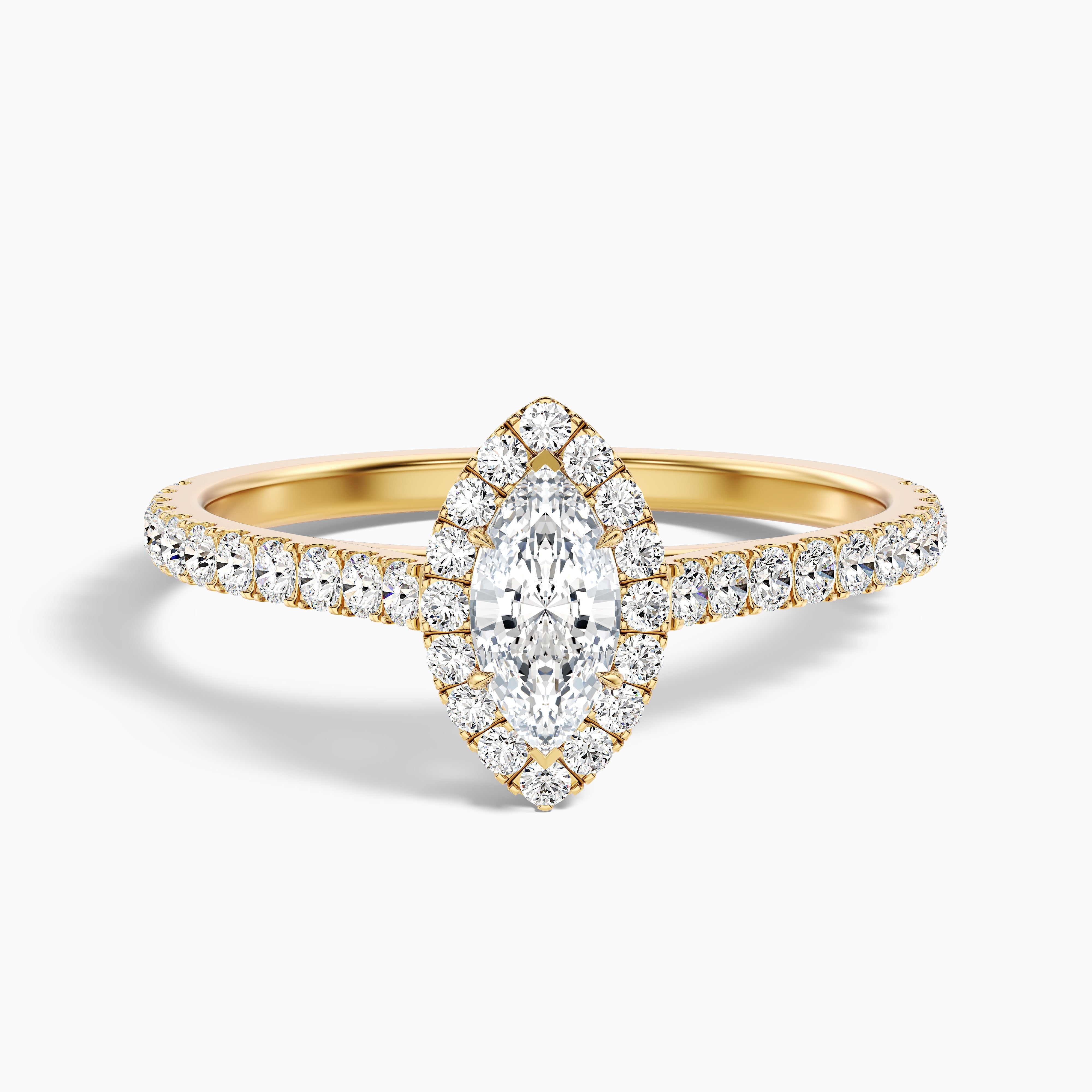
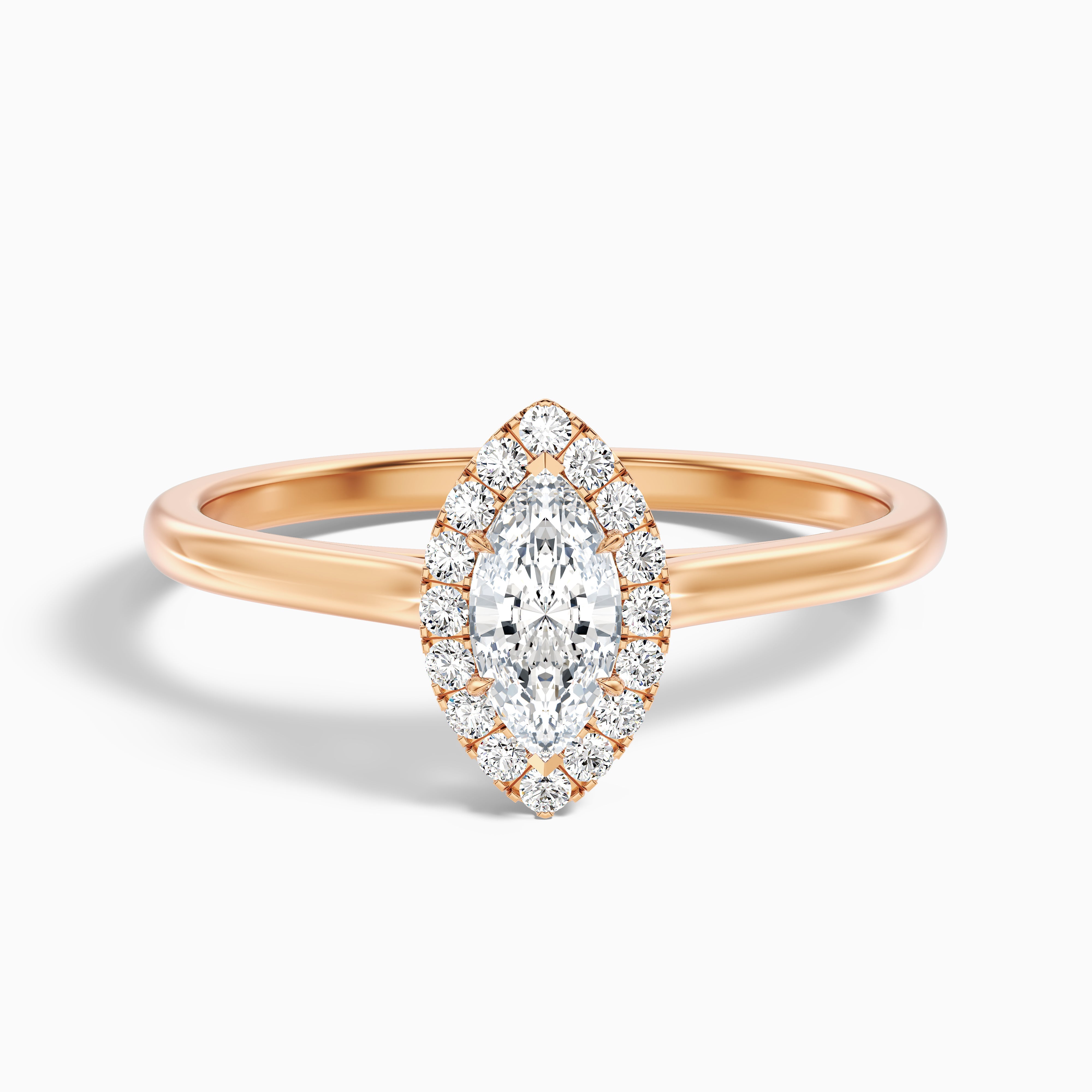
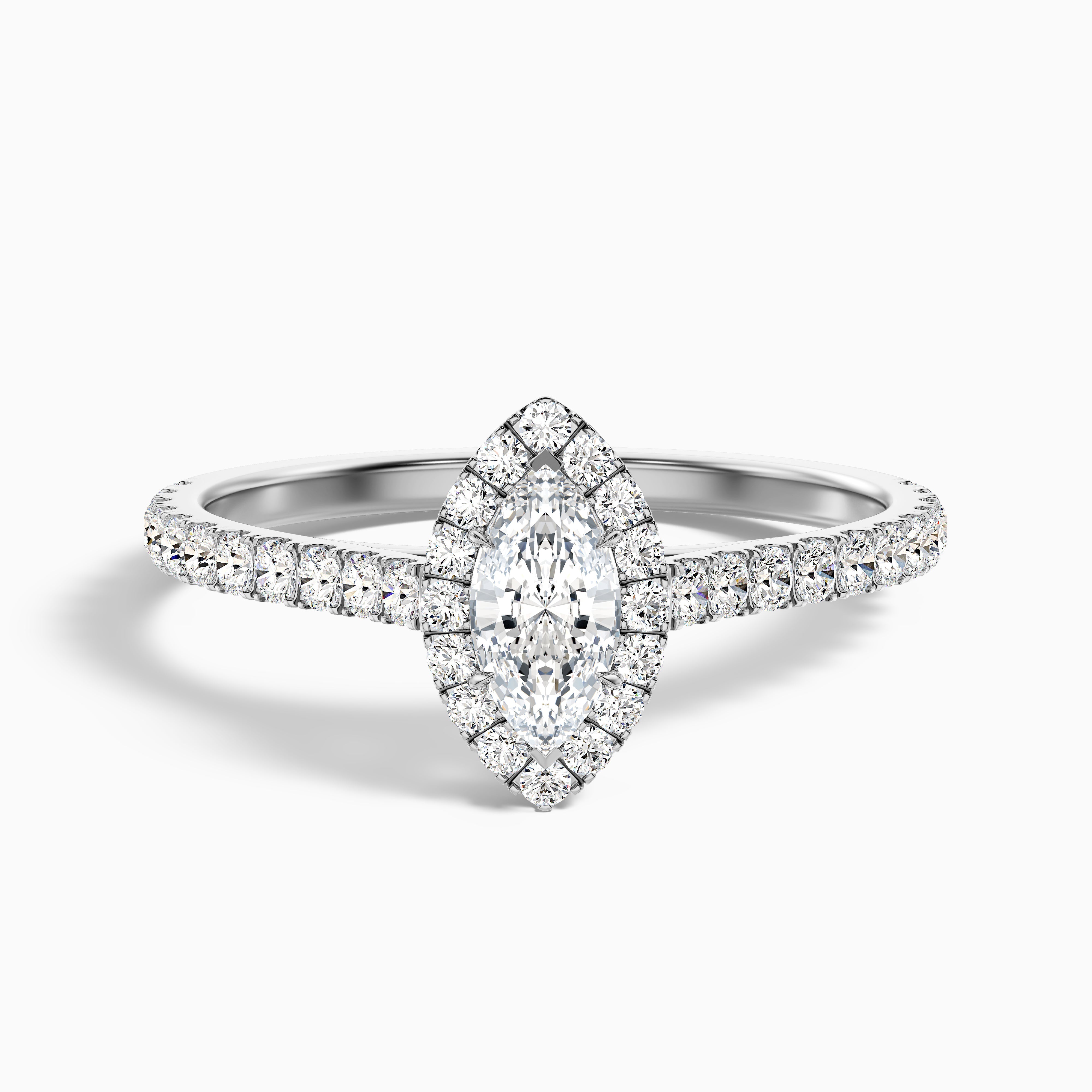
Halo settings feature smaller diamonds encircling the marquise-cut diamond. This adds to the sparkle and luxury feel. It also helps to camouflage the pointed tips of this diamond shape.
Three-stone settings feature diamonds on either side of the elongated center diamond. This setting provides balance and significance.
Vintage-inspired marquise-cut diamond ring designs feature ornate details on the band. Such touches complement the historical roots of the shape.
At CaratBee, our lab grown marquise cut diamond rings are crafted to secure the tips carefully while preserving the graceful outline. Lab grown diamond options are available in these settings, allowing you to focus on design and proportion without worrying about the exorbitant cost of mined diamonds.
Pros and Cons of Marquise-Cut Diamonds
The marquise shape offers clear advantages. It appears larger than many other cuts of the same carat weight. It creates a flattering, elongated look on the hand. It also feels distinctive, which appeals to those who want something less common.
There are some considerations as well. The pointed tips require proper protection, and the bow tie effect must be evaluated during selection. With thoughtful choice, these details become manageable and do not take away the beauty of the stone.
How to Take Care of Marquise-Cut Diamonds?
Taking care of a marquise-cut diamond is not a difficult task, but it requires precise attention. Regular cleaning with warm water and soap keeps the diamond shining. A soft brush is also helpful in removing residue around the tips and prongs of the diamond.
Regular checks help to ensure that the tips of the diamond are secure. Keeping the diamond in a separate place helps prevent scratches. Such habits help keep the diamond shining for a long time, whether it is mined or lab grown.
Conclusion
A marquise-cut diamond provides elegance with flair. The long shape of this cut provides presence without being loud. With proper attention to symmetry and setting, whether it is a natural or a lab-created diamond, this unique cut can be a symbol of individuality.
And with CaratBee, you can choose from an exquisite range of ring designs from the marquise cut lab grown diamond collection. Every piece is meticulously crafted with only certified diamonds and comes with a 30-day money-back guarantee and free shipping. You can also design custom rings according to your vision and budget requirements.


